A directional driller can recognize deteriorating toolface control before it becomes a visible trajectory problem. A rig crew can hear torque instability before it appears in an end-of-tour report. The limitation is not usually a lack of expertise. It is the gap between recognizing a condition, agreeing on the response, and executing it consistently at the rig. Drilling automation closes that gap by converting high-frequency operational data into engineering action and, where appropriate, machine control.
For operators and contractors, the objective is not to remove people from drilling decisions. It is to make parameter execution more repeatable, shorten the response time to changing conditions, and reduce the variability that drives non-productive time, invisible lost time, and poor wellbore quality.
Drilling Automation Is a Control Architecture, Not a Dashboard
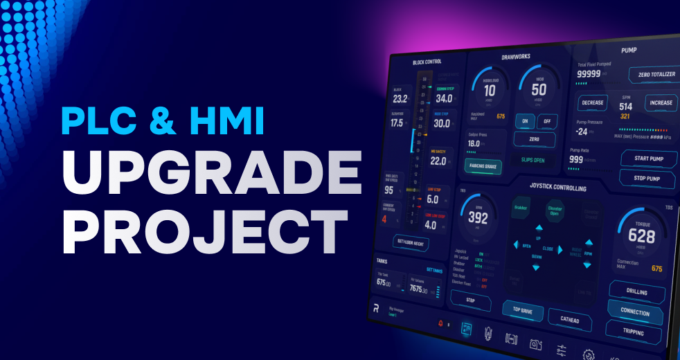
A dashboard makes information visible. Automation must do more. It must establish a reliable chain from sensor measurement to data validation, engineering interpretation, recommendation, command, and verified equipment response. If any layer is weak, the system may create attractive visualizations without improving well delivery.
This distinction matters on complex wells. Weight on bit, RPM, torque, standpipe pressure, flow, hookload, vibration indicators, and downhole directional measurements do not have value simply because they are available. Their value comes from context: the operating envelope, the planned trajectory, the drilling dysfunction being managed, and the action that should follow.
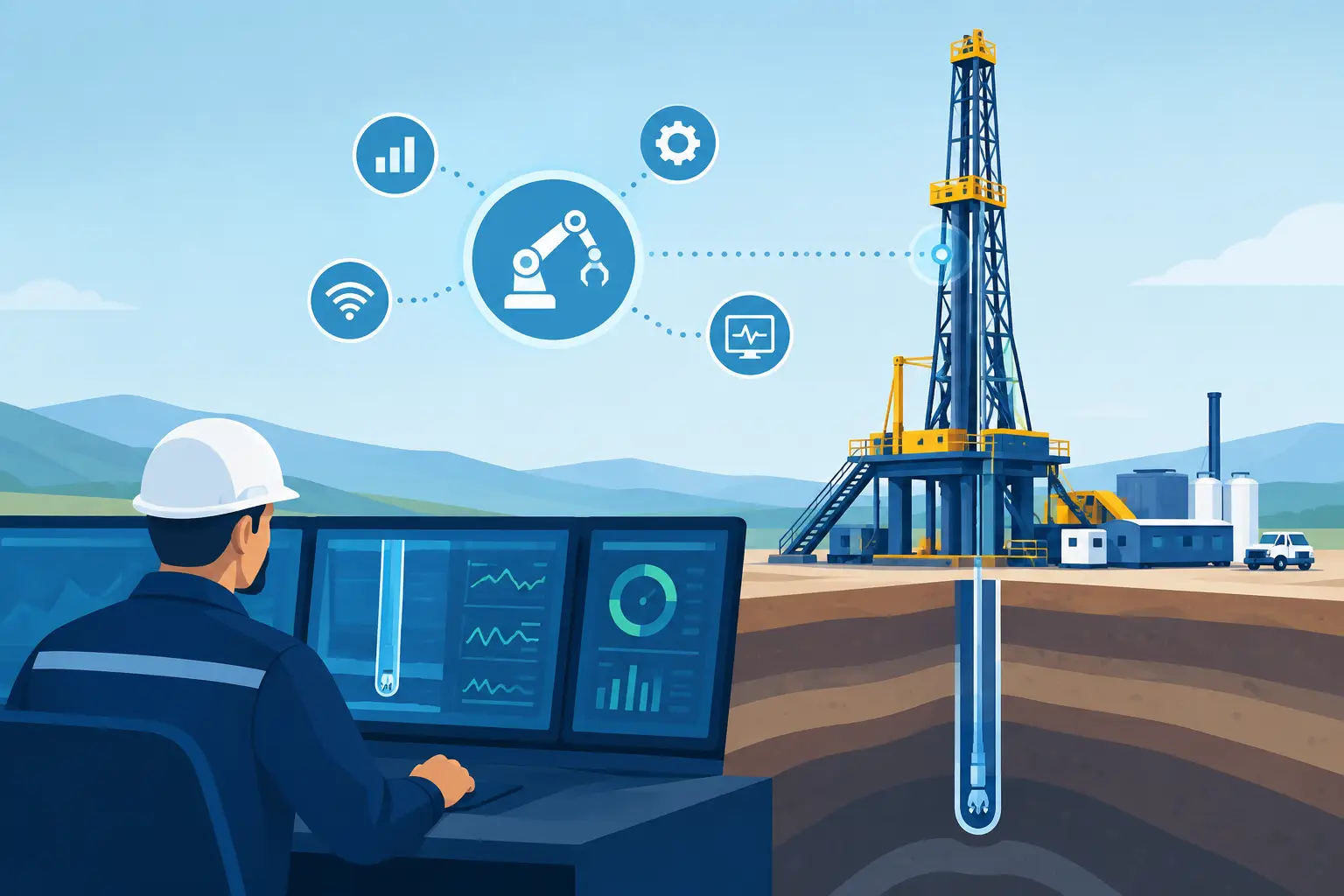
A practical automation architecture therefore combines rig-floor instrumentation, electronic drilling recorder data, control-system interfaces, downhole tool data, and engineering applications. The platform must normalize these inputs at sufficient frequency, preserve their time alignment, and make them available to personnel and algorithms working both at the rig and remotely. This creates a common operational picture rather than separate versions of the well held in different systems.
The final layer is control. In an assisted workflow, the system identifies a condition and presents a prioritized recommendation to the driller, directional driller, or drilling supervisor. In a closed-loop workflow, it can adjust approved parameters within defined limits. Both approaches are useful. The right choice depends on the operation, the maturity of the rig controls, the quality of the data, and the consequences of a control error.
Build From Trusted Rig Data
Automation cannot compensate for poor signal quality, inconsistent units, missing rig states, or uncertain equipment connectivity. Before deploying advanced optimization or autonomous control, teams need confidence that the data represents what is occurring at the rig.
Instrumentation and data integrity set the ceiling
Rig instrumentation should capture the variables required for the intended engineering use case, not merely satisfy reporting requirements. For example, an automated weight-on-bit workflow requires confidence in surface measurements, friction interpretation, rig-state logic, and the response of the top drive and drawworks. A directional automation workflow needs accurate survey integration, toolface data, slide/rotate recognition, and an unambiguous relationship between planned and actual wellbore position.
Data quality controls should identify flatlined sensors, implausible values, time drift, communication dropouts, and changes in calibration. These checks must operate in real time. Discovering a bad pressure channel after a drilling section is complete does not support control decisions made during that section.
A modern EDR environment also needs to be interoperable. Rigs often contain equipment from multiple suppliers, with signals distributed across legacy and modern control systems. The deployment challenge is not only collecting the data. It is securely connecting it without disrupting existing rig operations, while preserving clear ownership of equipment commands and safety interlocks.
Rig state provides operational meaning
The same torque value means different things while drilling ahead, reaming, circulating, making a connection, or tripping. Rig-state detection creates the operational context needed to interpret data correctly and prevents algorithms from treating every fluctuation as a drilling event.
Reliable state recognition also improves reporting accuracy. It exposes invisible lost time that can be hidden inside broad activity categories, helping teams distinguish between planned operational time and avoidable execution inefficiency. That distinction is necessary when automation performance is evaluated against real well-delivery outcomes.
Turn Real-Time Data Into Engineering Action
Once data is trusted and contextualized, the next requirement is engineering logic. This is where drilling automation becomes an operating system for execution rather than a reporting layer.
The logic may be rule-based, model-based, or informed by machine learning. A rule-based workflow can detect that torque has crossed a defined threshold while differential pressure rises and recommend a controlled change in weight on bit or RPM. A model-based workflow can estimate the likely effect of a parameter adjustment on mechanical specific energy, hole cleaning, or vibration risk. Machine learning can recognize patterns across large data sets, but it should be constrained by physics, operating limits, and approved drilling practices.
For directional drilling, automation can continuously compare actual inclination, azimuth, dogleg severity, toolface response, and tortuosity indicators against the well plan. Rather than waiting for a significant positional deviation, the system can identify deteriorating trajectory quality early and support a corrective action while there is still room to respond efficiently.
This is particularly valuable where multiple specialists are involved. The rig crew, directional driller, drilling engineer, and real-time operations center should be working from the same high-frequency data and the same engineered interpretation. CYBERSTEER and CYBERDRILL are examples of modules designed to connect directional execution and drilling optimization workflows to that shared operational layer.
Closed-Loop Control Needs Defined Boundaries
Closed-loop control is often discussed as a single destination. In practice, it is a progression. A crew may first use automated data capture and alerts, then parameter recommendations, then supervisory control, and finally automatic execution of selected commands within a bounded operating window.
The progression should be based on demonstrated reliability, not on a desire to label the rig autonomous. A system can be highly effective when it automates only the repetitive decisions that consume attention and produce inconsistent execution. Connection procedures, setpoint maintenance, managed parameter changes, and drilling dysfunction responses are common candidates, provided the equipment interfaces and safeguards are proven.
Every control loop requires explicit limits. These include maximum and minimum parameter ranges, rate-of-change limits, hold conditions, manual override capability, alarm priorities, and clear fail-safe behavior when data quality falls below an acceptable threshold. Automation should default to a known safe state when it loses confidence in its inputs.
Human authority remains essential. The driller and supervisor need to understand why a recommendation or command is being made, what constraints are active, and how to intervene. Explainable control logic builds field acceptance faster than a black-box model that cannot be challenged during a critical operation.
Measure the Outcomes That Matter to the Well
The performance case for automation should be established before deployment. Measuring only footage drilled or hours connected to a platform can hide whether the system improved execution. The more useful question is whether the technology reduced variability and improved the decisions that determine total well cost.
Performance management should track a combination of leading and lagging indicators:
- Parameter compliance against the engineered operating envelope.
- Response time from condition detection to corrective action.
- Connection consistency and time spent in defined rig states.
- Wellbore tortuosity, trajectory adherence, and directional correction effort.
- NPT, invisible lost time, drilling dysfunction events, and section-level cost performance.
These metrics require a baseline. A pilot on one interval or rig can validate data connectivity and user workflows, but it may not prove the full economic case. Teams should compare like-for-like sections where geology, hole size, bottomhole assembly design, and operational objectives are understood. Where direct comparison is difficult, parameter consistency and response-time improvements can provide early evidence while larger data sets are developed.
Deploy in a Sequence That Field Teams Can Trust
A successful deployment does not start with a broad promise of autonomy. It starts with a specific operational constraint. That may be excessive tortuosity in a high-angle section, inconsistent drilling parameters between crews, delayed recognition of hole-cleaning risk, or fragmented data across contractor systems.
From there, define the required signals, engineering logic, operating limits, user roles, and acceptance criteria. Test the workflow against historical data where possible, then validate it under live supervision. Field personnel should be involved in alarm design, screen layout, recommendation wording, and override procedures. They understand the practical conditions that cannot be inferred from a data set alone.
Scalability matters after the first use case is proven. An enterprise platform should allow an operator to add EDR capability, directional support, optimization functions, cloud engineering dashboards, and control interfaces without rebuilding the data foundation for every rig. The goal is a consistent operational architecture that can accommodate different rig configurations and regional requirements while maintaining common standards for data, security, and performance review.
The most productive next step is to identify one decision that crews repeatedly make under time pressure, quantify its cost when executed inconsistently, and build the data-to-control workflow around it. That is where automation earns trust: not as a distant concept, but as a measurable improvement in the next drilling section.