In today’s digital environment, organisations need more than secure systems. They need flexibility in how technology is deployed, confidence in how information is protected, and greater control over where data is stored and accessed.
At CYBERLOOP, these priorities come together through one principle: Secure By Design.
INFORMATION SECURITY START WITH RISK
Security begins with understanding risk…
CYBERLOOP assesses information-security risks across systems, users, applications and infrastructure, then applies appropriate controls based on business impact and operational requirements.
Our approach focuses on protecting the Confidentiality, Integrity and Availability of business and operational information. This includes
- Controlled access,
- Endpoint protection,
- Vulnerability management,
- Security monitoring,
- Backup and recovery,
- Incident response
- Regular review.
Preventing incidents is only part of the job. The real aim is resilience: the ability to identify, detect, respond to and recover from security events. That is why we treat information security as an ongoing business responsibility, not a one-time technical project.

CLOUD FLEXIBILITY WITHOUT SECURITY COMPROMISE
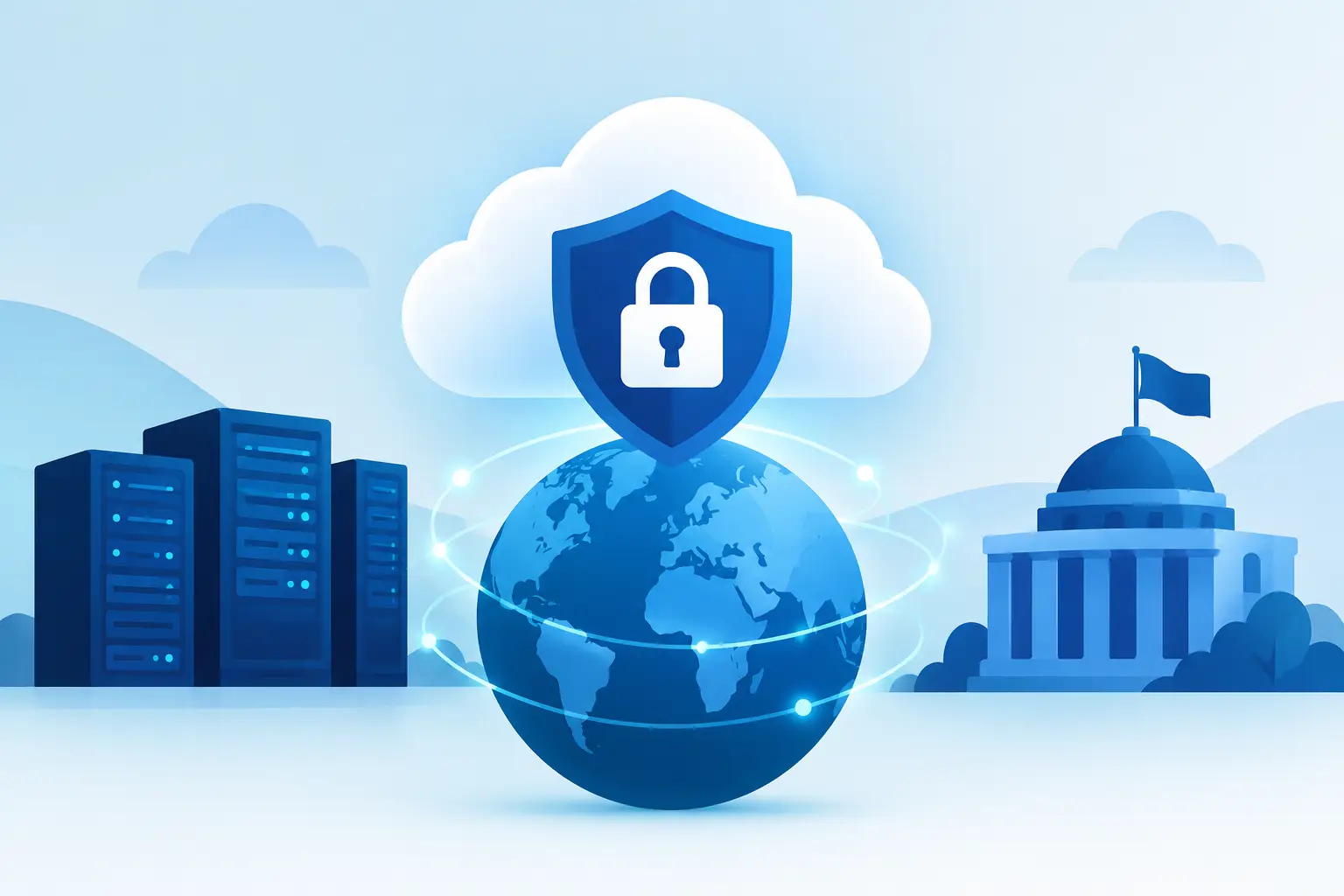
Modern organisations operate across increasingly complex technology environments, and not every customer has the same infrastructure requirements. CYBERLOOP follows a cloud-agnostic approach that supports deployment across different cloud environments based on customer, technical and business requirements.
This reduces unnecessary dependency on a single vendor while giving customers greater flexibility to work with their preferred infrastructure, regional hosting requirements and existing technology standards.
Flexibility shouldn’t mean inconsistent security. Security should travel with the workload. Whether a workload operates in one cloud environment or another, CYBERLOOP applies consistent security principles around access control, monitoring, secure configuration, resilience, backup and risk management.
This allows infrastructure to remain flexible while expectations for protecting information remain consistent.
DATA SOVEREIGNTY AND CONTROL
Knowing that data is secure is no longer enough. Many organisations also need to know:
- Where is the data located?
- Who can access it?
- How is it protected?
- Which jurisdiction applies?
Data sovereignty considers the legal, regulatory and contractual requirements associated with where information is stored, processed and accessed.
CYBERLOOP considers data sovereignty as part of the wider information-security framework rather than simply as a hosting decision.
Our flexible architecture can support customer requirements relating to geographic data location, authorised access, regional hosting and applicable jurisdiction, depending on the agreed deployment model.
This helps customers maintain greater control over their information while ensuring that security remains embedded throughout the data lifecycle.
ISO 27001: HOW WE BACK THIS UP
Our approach is anchored in ISO 27001 certification. Certification required us to formalize how we identify, assess, monitor and improve information-security risk. We reviewed and strengthened our security policies and procedures, risk management, access controls, vulnerability management, backup and recovery, supplier security, employee awareness and monitoring.
Certification was a starting point, not a finish line. The framework continues to guide how we manage risk, review controls and improve our practices. For us, ISO 27001 is more than a compliance requirement: it is how security becomes part of everyday operational and technology decisions.
WHAT THIS MEANS FOR OUR CLIENTS
For CYBERLOOP clients, bringing cybersecurity, cloud flexibility and data sovereignty together provides three important benefits:
- Security: protecting information through consistent, risk-based controls.
- Flexibility: supporting different cloud and infrastructure requirements.
- Control: helping customers manage where information resides, who can access it and which requirements apply.
As technology, regulation and cyber threats continue to evolve, organisations need architectures that can adapt without weakening security.
At CYBERLOOP, that means building protection, resilience and flexibility into the design from the beginning.
Secure by design. Flexible by architecture. Responsible with data.